What is the 18-Year Property Cycle (and how can you use it to your gain?)
With the right knowledge, you can make a lot of money in property. So how do you do it? One of the best tricks in the book is using the 18-year property cycle as the foundation for your investment decisions. In fact, this is what many property investors do!
In this article, we’ll dive into why the property cycle is so important and how you can use it to your advantage.
Wise Tip: Always conduct thorough research before making any investment.
What is the 18-year property cycle?
Before we carry on, let’s go back to basics for a moment. To really understand how to use the property cycle, you need to know what it’s all about.
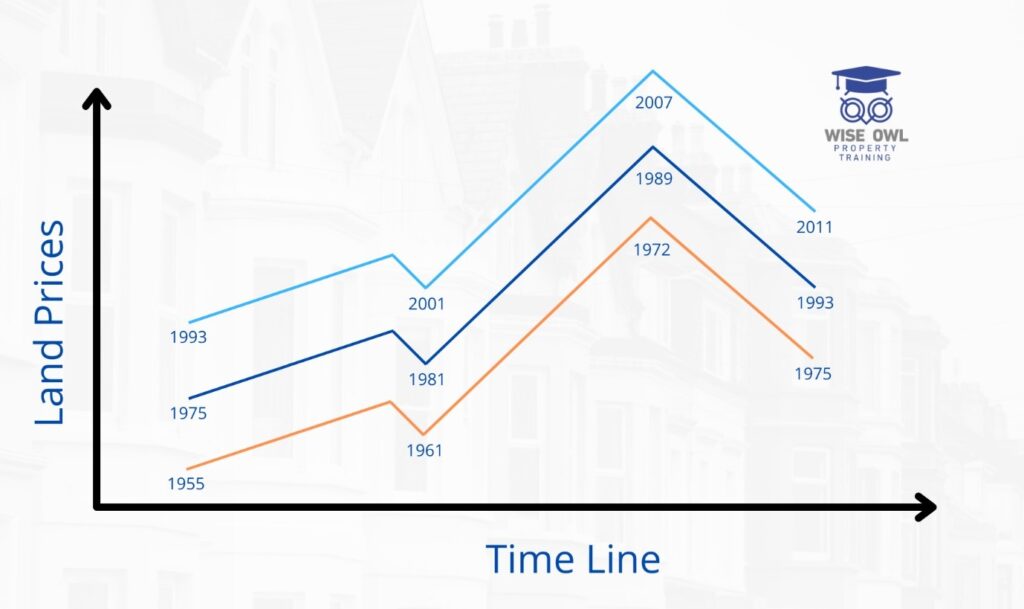
Fred Harrison, a British real estate economist, developed the theory after examining hundreds of years’ worth of data. According to his research, housing prices change repeatedly and predictably over time. He concluded that the average length of a complete cycle was 18 years, with each cycle divided into different phases. Since its discovery, the cycle has been expanded on by other economists and is now used to try to predict future house price movements.
How does the property cycle work?
We start at the crash and subsequent recovery – house prices are low at the end of a recession, low enough to tempt some brave investors to start buying. It’s a risk, but smart investors will take advantage of the lower prices. Most investors will be notably absent from the market, and some may even be forced to sell.
The trouble is, no-one knows when the prices have hit their lowest point, so those whose portfolio hasn’t stood the test of a recession may panic-sell. In the background, slow, steady growth will begin as people recover from the crash and trust in the market is rebuilt. You’ll find larger companies starting to snap up prime assets, especially in the bigger cities.
Next is what is known as the mid-cycle wobble, dip or correction. This is where prices stabilise, stop growing or even dip a bit before an aggressive second rise.
We then enter a stage of rapid growth, where confidence turns into overconfidence. As prices soar through the roof, demand is high, and banks are starting to lend again. Amateur investors start buying at any level, with properties in all conditions going for their asking price.
The problem is – it can’t last. Prices become unsustainable because wages aren’t rising as swiftly as house prices. As the economy grows so does the demand for properties, domestic and commercial. Eventually, the inevitable happens – another Crash. The cycle begins again.
This might seem like a random series of events, but it’s not. There is a reason why, when, and how it happens. So really, prices rising and falling is natural; it’s nothing to panic about.
See how Mentorship can help